Does your business still need a business website in 2026? It's a fair question. AI tools answer questions in seconds, social media grabs attention before search ever gets a look, and building a proper site costs real money — so why bother?
We're not going to pretend nothing changed. Things have. But the honest answer isn't "websites are dead." It's that you probably need a business website more than before — just not for the reason you might think. Not as a static brochure sitting in a Google results page. As the owned hub behind everything else: the place AI reads to form its answers, the place people land to verify you, and the place interest turns into a call or an enquiry.
Here's the full picture, without the hype.
The shift is real. Let's be honest about it.
Something genuinely shifted in how people discover businesses. They ask ChatGPT for recommendations. They scroll Instagram and never leave the app. They read Google's AI overview and feel like they got the answer without clicking anything.
The numbers back that up — and they're worth taking seriously. Sparktoro has reported that in some markets, nearly 60% of Google searches (in Europe) now end without a click to an external website. A Bain survey found that about 80% of consumers rely on zero-click results for at least 40% of their searches. And Gartner has forecast that organic search traffic could decline by roughly 25% by the end of 2026 as AI-driven answers take a larger share of attention.
If you're a business owner watching traffic patterns shift, you're not imagining it. The old model — rank on Google, get clicks, get leads — is under pressure. Pretending otherwise would be dishonest, and dishonesty is exactly what this post is trying to avoid.
But here's what AI and social actually do to websites
Here's the reframe most "you still need a website" articles skip.
AI engines don't invent your business from thin air. They read websites — and other sources — to generate answers and cite recommendations. Your site is the source material behind the answer, even when nobody clicks through. Social media creates awareness and curiosity. AI creates instant answers. Neither replaces the need for a credible place that represents you on your own terms.
The website's job didn't disappear. It shifted. Less "be found via blue links," more "be the trusted source that AI and people rely on when they're deciding who to call." If you have no site — or a site that's slow, thin, or hard to read — you're simply not in the answer. Someone else's business is.
Social and AI are discovery layers. Your business website is where that discovery lands and becomes action: a form filled in, a number dialled, a quote requested. Without that layer, you're building awareness that has nowhere to go.
The one thing you actually own
This is the strategic argument, and it's the one that hasn't changed.
Social algorithms shift overnight. Accounts get suspended. Marketplaces raise fees. AI platforms decide which sources get cited and which don't. Everything you build on someone else's platform is rented attention — useful, often essential, but never fully yours.
Your website is owned media. No algorithm update can remove it. No platform policy change can hide it from people who type your name directly. No competitor's ad budget can bid against your own domain when someone already wants you.
Relying only on Instagram, or only on a marketplace listing, or only on being mentioned in AI answers you can't control means building on ground you don't own. Smart businesses use those channels — aggressively, creatively — but anchor them to a hub they control. That's what a business website is for.
Trust still closes the deal
Discovery might happen on AI or social. Trust still gets built — or lost — on your website.
Before someone calls, books, or sends money, they usually check you out properly. They look for proof you exist, what you actually do, whether you look credible, how to reach you. A business with no real website, or a neglected one from 2019, reads as less legitimate — fairly or not.
Social creates awareness. Your website is where interest becomes a customer. If the site doesn't convince, doesn't make the next step obvious, or isn't bringing you leads despite traffic elsewhere, the whole system leaks at the point that matters most.
That's not an argument against social or AI. It's an argument for getting the owned hub right.
The catch: many websites are invisible to AI
Having a website isn't enough if AI and people can't read it well.
Sites built heavily in JavaScript without proper server-side rendering can be partly or fully invisible to AI crawlers — the content exists for humans with fast browsers, but not for the systems trying to summarise your business. Slow, messy, or poorly structured sites are hard for AI to parse and hard for humans to trust. Performance matters too: a site that takes five seconds to show its main content fails both audiences.
Be wary of quick-fix hype. A May 2026 Ahrefs study of roughly 1,885 pages found that schema markup did not directly increase AI citations. Adding structured data alone doesn't make you appear in AI answers. What wins is real clarity, genuine helpful content, fast loading, and credibility signals that hold up when someone — human or machine — actually reads the page.
This is the work we focus on when we build web development projects: fast, well-structured sites where content is readable at first render — by people and by crawlers alike. We rebuilt our own site around exactly this thinking, which we wrote about in why your business website needs to load fast. The bar moved; "having a website" and "having a website that works in 2026" are different things.
So, do you need a website?
The straight answer: yes — but the bar moved.
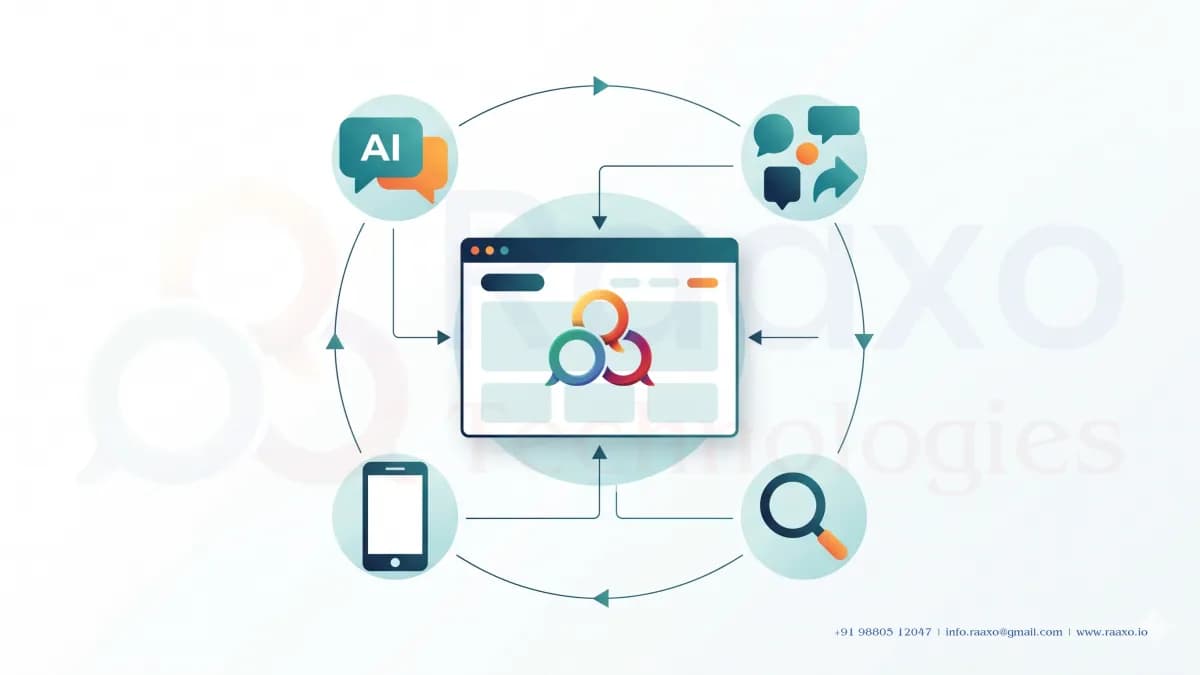
You don't need a brochure that merely exists. You need a site built to be found, read, trusted, and to convert. The real strategy is both, not either/or: website plus social plus AI presence as one system, with your business website as the owned hub that makes every other channel work harder.
Honest nuance: a pure hobbyist or content creator living entirely inside one social platform might get by without a site for a while. But any business that wants credibility, control, and steady leads — a consultancy, a service company, a product brand, a growing SME — needs an owned hub. The question isn't whether. It's whether yours is good enough for how discovery works now.
We build web development projects for businesses across India from Chennai, working remotely with teams everywhere — no fake local offices, just sites designed to be found, read, and acted on.
Frequently asked questions
Can AI replace my business website?
No. AI reads websites to answer questions and recommend businesses. A clear, credible site makes you more likely to be surfaced in AI answers — not less. Without one, you're depending on other people mentioning you accurately, which isn't a strategy.
Isn't social media enough instead of a website?
Social is powerful for reach and awareness. But it's rented attention on a platform you don't control. A business website is owned — and it's where people verify you, read about your work properly, and take action. The strongest setups use both, with the site as the hub.
Why might my website be invisible to AI tools?
Heavy JavaScript without proper server-side rendering, slow loading, or messy structure can make a site hard for AI crawlers — and people — to read. If the main content only appears after scripts load, you may be partially absent from the sources AI relies on. Speed and structure aren't technical trivia; they're visibility.
Does my small business really need a website in 2026?
If you want credibility, control, and consistent leads, yes. The website is the owned hub that strengthens every other channel — social, referrals, AI mentions, word of mouth. Skipping it means building on platforms you don't own and hoping that's enough.
What makes a website "AI-ready"?
Clear, genuinely helpful content. Fast performance. Clean structure with proper headings. Real credibility signals — case studies, specifics, honest positioning. Built for people first, which AI rewards too. Not schema shortcuts or keyword tricks. Substance.
The bottom line
The age of AI didn't make your business website optional. It made a bad or invisible one more costly.
Acknowledge the shift — zero-click search, AI answers, social discovery — and then build accordingly. Own your hub. Make it fast, clear, and credible. Use social and AI as layers that send people somewhere you control.
If you're not sure whether your current site meets that bar — or whether you need to build one from scratch — tell us what you're working with. We'll give you an honest answer, not a sales pitch.
Raaxo Technologies builds fast, modern, AI-ready websites for businesses across India — owned platforms designed to be found, trusted, and to turn visitors into customers. Talk to us about your website.